Janakpur vehicle hire should begin with the purpose of the visit: a pilgrimage, a cultural stay, a family journey or a connection within a wider Nepal circuit. The arrival point, hotel and main visits all need to be connected in a practical order. A clear vehicle plan gives the group time at the destination without leaving pickup and onward travel to last-minute decisions.
Identify the visits that matter most
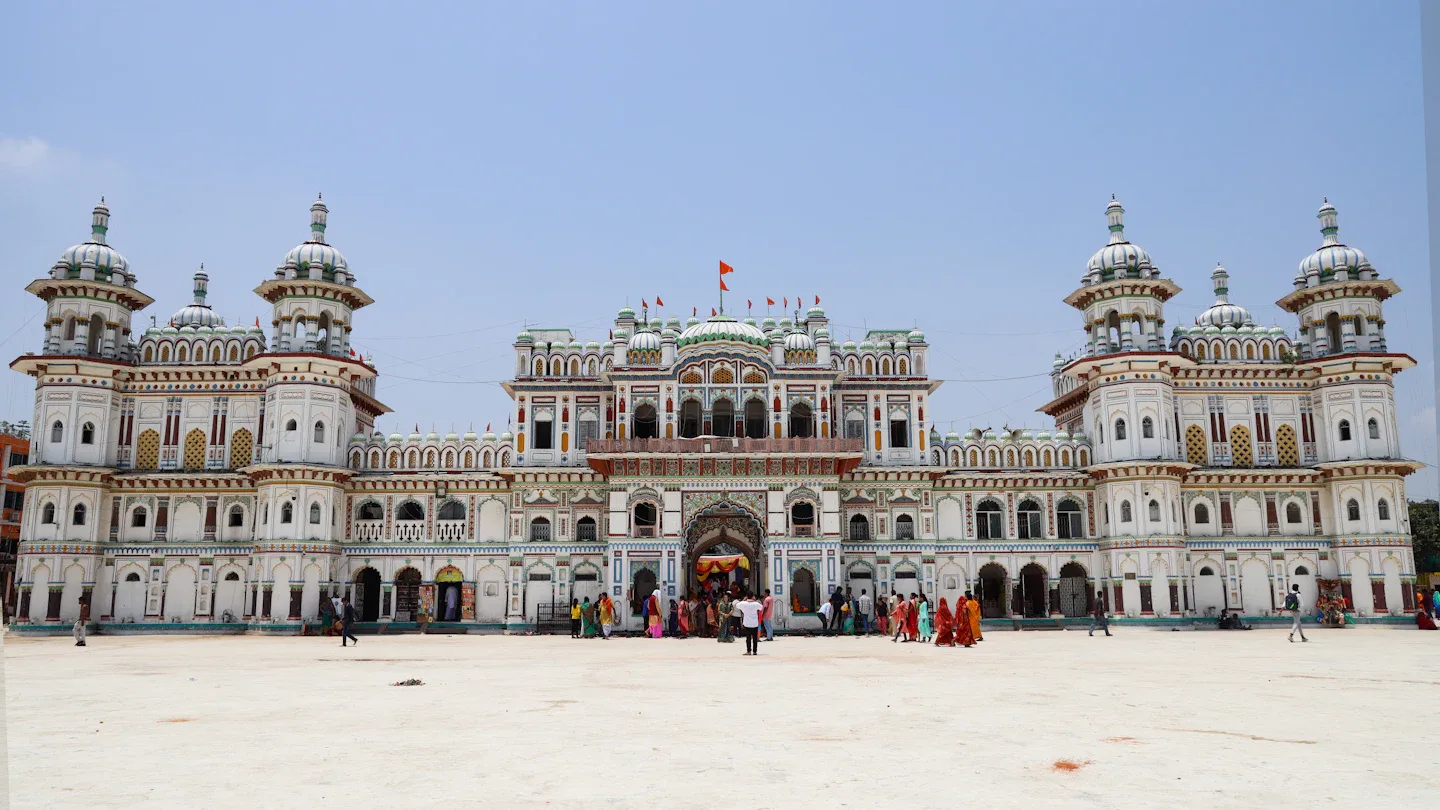
The Nepal Tourism Board’s Janakpur guide highlights the city’s religious and cultural importance. If Janaki Mandir or another specific visit is central to your trip, tell the team early and ask about current visiting arrangements. A transport booking should be organised around the group’s priorities rather than treating every religious stop as the same length or assuming all areas are accessible at all times.
Decide whether you want a brief introduction or a more substantial stay. A short visit between road transfers has less flexibility than a dedicated day with time to settle into a hotel. Both can be discussed, but the itinerary should describe them honestly. Avoid filling the schedule with additional stops that leave too little time for the main purpose of the journey.
State the exact arrival connection
Provide the station, airport, hotel or other location where the vehicle service begins. Include the travel date and the relevant service details where a flight or train is involved. The team should not have to infer the arrival point from the city name alone. Ask for a clear meeting instruction and save it before travel, including the contact to use if you cannot locate the driver.
If the wider journey involves arrival in India followed by entry into Nepal, describe those legs separately. A Darbhanga arrival, for example, is an arrival connection that still needs a confirmed crossing and Nepal-side plan. Do not describe it as if the airport itself were the border. The operator should explain which vehicle handles each stage and where any handover occurs.
Connect the hotel and sightseeing plan
Send the hotel’s name and location, and clarify whether the vehicle first transfers guests there or begins sightseeing immediately. After a long arrival journey, time to check in and refresh may be more comfortable than starting a full visit at once. Ask the group what pace it prefers and share any fixed religious or family commitment with the team.
If the hotel has a restricted approach or a separate parking arrangement, include those instructions. A larger group vehicle may need a practical boarding point different from the front door. Confirm how luggage reaches the property if the final approach involves another arrangement. These details are particularly useful for families carrying large bags or travelling with older relatives.
Allow time outside the vehicle
Temple and cultural visits may involve walking, waiting and following local access instructions. Ask about the practical drop-off and the route on foot. Describe any difficulty with steps or standing before the itinerary is confirmed. Private vehicle hire can make the connection easier without removing every physical part of the visit. The group should know what to expect rather than relying on a broad promise of comfort.
Agree where the driver waits and how the group returns. If guests separate for different parts of the visit, choose a clear reunion point and a time everyone understands. Keep one organiser responsible for communication. Several relatives giving different collection instructions can make a simple movement unnecessarily confusing.
Request guiding or language support explicitly
A driver and a guide serve different purposes. If you want interpretation, help organising the religious visits or a particular language, ask for that service separately. Confirm whether the guide travels with the group and needs a seat in the vehicle. Do not assume that a transport-only booking includes an accompanying person for every walking visit.
For a self-guided visit, ask for current opening and admission information where relevant. Follow instructions at the destination and respect areas where access or photography is restricted. A tour booking does not override local rules. If a particular ritual or arrangement is important, confirm it with the relevant provider rather than expecting the driver to organise it spontaneously.
Consider busy dates and group pace
Religious occasions and local events can affect movement, access and the time needed for visits. Ask the team to check the current situation for your date. Do not rely on a generic travel time from an old article when planning a fixed appointment. A flexible schedule gives the group room to respond to conditions without turning the visit into a hurried sequence.
For family groups, leave space for meals, rest and different walking speeds. Communicate vegetarian, Jain or other dietary requirements before travel, and confirm the meal arrangement separately. If some guests want a shorter day, discuss how that preference can be accommodated within the vehicle plan. The organiser should know which changes require another transfer rather than assuming the same driver can be in two places at once.
Choose the vehicle using the complete manifest
Count all guests, children and accompanying staff. Include suitcases and any unusual items, particularly when the visit is part of a multi-day circuit. Ask the operator to recommend a configuration that fits both passengers and luggage. A vehicle’s nominal seating should not be taken as proof that every traveller’s full baggage will fit comfortably.
If several vehicles are used, assign passengers before boarding and keep the same grouping clear during transfers. A shared lead contact can coordinate the operation while each vehicle has a designated passenger representative. Avoid last-minute changes that leave one vehicle overloaded and another underused. A simple manifest supports a calm arrival and departure.
Make the onward route part of the request
Tell the team whether the group returns to the arrival point, continues to Kathmandu or travels elsewhere. Include the final hotel or departure connection and any fixed timing requirement. The vehicle and quotation should cover the complete agreed route, with waiting and additional stops identified. A local sightseeing rate should not be assumed to include an intercity departure.
Before the final transfer, check the passenger list, luggage and current departure details. If a flight or train has changed, send the update to operations rather than assuming it has been passed along. A thoughtful Janakpur itinerary gives time to the visit itself and keeps the surrounding transport clear enough for the group to travel with confidence.
Build a brief the transport team can use
Write the journey as a sequence of dates, pickup points, destinations and overnight stops. Add the number of travellers, their luggage and any practical boarding requirements. Mark fixed commitments such as a flight or event separately from flexible sightseeing preferences. This helps the team see where the plan has room to move and where a missed connection would affect the wider holiday. A complete outline is more useful than an isolated request for a daily vehicle rate.
Ask the provider to explain the proposed allocation rather than simply approving the first vehicle name. Confirm passenger seating, luggage arrangements and suitability for the planned route. If a model is essential, obtain written acceptance; if it is a preference, identify the features that matter most. Changes to guest numbers, baggage, hotels or itinerary can change the best vehicle choice, so send those changes before the final confirmation rather than on the morning of departure.
Make the quotation easy to compare
Check the date range, route, collection address, final drop-off and service hours. Establish whether the quote is for a point-to-point transfer, a sightseeing outing or a multi-day arrangement with specific daily movements. Confirm the price currency and basis, then review driver, fuel, waiting, parking, road charges and any overnight expenses. Ask which items remain payable separately and how additional stops or changed destinations would be calculated.
The booking terms should explain cancellation, rescheduling, payment arrangements and the contact for a problem on the day. Read them while there is still time to resolve questions. Do not assume that a published starting price covers every vehicle or date. Keep the final agreed itinerary and quotation together so that the guest organiser and operations team can refer to the same version when discussing a change.
Prepare the handover from planning to travel
Before departure, obtain the driver or meeting instructions and keep the operations contact available offline. Confirm the hotel entrance or station meeting point, because a destination name may describe a large area. Choose one group contact to relay updates, and keep essentials such as documents and medicines with their owners. Count larger bags at loading and unloading. These small routines make the agreed plan easier to follow without turning the holiday into a complicated administrative exercise.
Plan this journey with our team
Vehicle Rent Nepal is a site by Shivalaya Holidays Pvt. Ltd. For the wider holiday, explore Muktinath Darshan with Chitwan Jungle Safari and ask the team to match the transport to your chosen itinerary. Nepal Tour.Travel is also our sister concern. Vehicle hire and a complete tour package have different inclusions, so confirm exactly which services you want in the same quotation.
Send your dates, pickup location, destinations, passenger count and luggage details through our vehicle quotation form. You can also speak with Sushma Aryal on +977 9851206780 or Dinesh Ghimire on +977 9851421660 / +91 8744821660. A clear brief lets the shared team propose the vehicle and arrangements that fit your journey.

Site by Shivalaya Holidays Pvt. Ltd. Our shared Kathmandu team helps arrange private vehicles, border connections and Nepal holidays. Contact our team for arrangements matched to your dates.