A Kathmandu–Chitwan private transfer should be coordinated with the lodge or hotel that receives you. The destination name alone is not enough: the property’s location, approach and activity schedule affect the plan. Start by deciding when the group needs to arrive and which parts of the first day are flexible, then choose a vehicle and departure arrangement that support that stay.
Name the property, not only the destination
“Chitwan” can describe a wider destination area rather than one hotel entrance. Send the exact property name, address and a map location. If the accommodation provides approach instructions or a local meeting point, share them with the transport team. The last part of the route should be agreed before the driver begins, especially when a group is carrying substantial luggage.
If the lodge has arranged its own final connection, clarify where the private transfer ends and who meets the guests next. Do not assume that two suppliers have coordinated a handover unless that is part of the confirmed package. Identify the contact responsible for each movement and keep the instructions together in the final itinerary.
Coordinate with the lodge’s first-day program
A stay may include meals, a briefing or activities with a planned start. Ask the accommodation which items are fixed and which can be adjusted if road travel takes longer than expected. Give that information to the transport team before choosing the pickup time. It is easier to plan a comfortable arrival when everyone understands the same priorities.
Avoid treating a road arrival estimate as a guaranteed activity check-in. If an experience is central to the holiday, consider whether it belongs on the following day. The lodge and tour team can discuss the best sequence. A rushed arrival that immediately sends tired guests into a fixed activity may be less enjoyable than a calmer introduction to the stay.
Decide how direct the journey should be
A direct transfer and a journey with a significant sightseeing stop are different services. Tell the operator if you want a named visit, a long lunch or multiple collection points. Ask whether those additions fit the arrival plan at the lodge. Do not add a major stop simply because it appears near the route on a map; the full visit may require more time than the drive to its entrance.
Mark optional breaks separately from essential stops. If conditions slow the journey, the group can then protect its main priorities without trying to preserve every extra. The driver should not be expected to recover time by rushing. A practical itinerary makes sensible choices about what can move rather than relying on every stage running at its minimum duration.
Choose the vehicle for guests and luggage
Count passengers, suitcases and any special equipment. A group arriving for a longer Nepal holiday may carry more than it needs during the Chitwan stay itself, but all those bags still require a suitable transport arrangement. Ask the team to confirm actual guest seating and luggage space. Include guides or tour leaders who travel with the party.
If the property has a particular vehicle approach, make sure that is considered in the allocation. A larger vehicle may keep everyone together while needing a different boarding or drop-off arrangement. The best choice depends on the whole movement, not only the number of people. If an additional luggage vehicle is suggested, clarify where it travels and how bags are checked at handover.
Keep transfer and wildlife activities separate
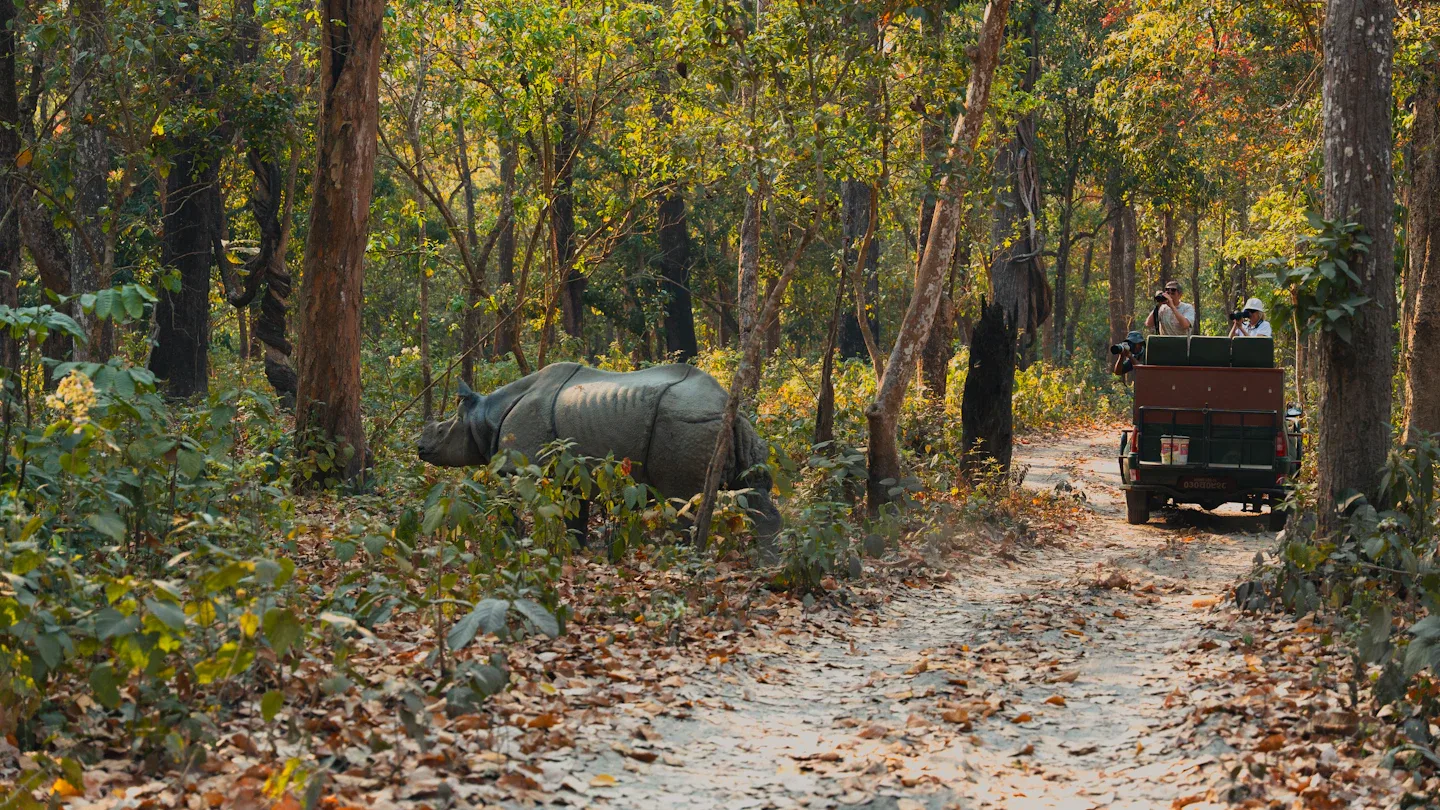
A road vehicle bringing guests to a lodge is not automatically the vehicle used for every activity at the destination. Ask the lodge or package organiser which local experiences and transport are included. Vehicle Rent Nepal’s transfer quotation should not be interpreted as including a safari, guide, admission or another activity unless the confirmation says so.
The same applies to expectations about wildlife. A vehicle booking cannot guarantee a sighting or a particular experience within a protected area. Discuss activity choices and current arrangements with the relevant provider. Keeping those responsibilities separate helps the group understand what it has booked and whom to contact if an activity plan changes.
Prepare for a comfortable travel day
Arrange hotel checkout and breakfast so that the group is ready at the confirmed pickup time. Keep essential items in a small accessible bag and larger luggage organised for loading. Tell the team about dietary preferences for a meal stop and any need for regular comfort breaks. Those requirements are easier to accommodate when they are known before the route is underway.
For families, consider the pace of the whole day rather than only the road section. A long transfer followed by an ambitious afternoon may be too much for some travellers. If the group includes people with different preferences, explain that to the tour organiser. A flexible first evening can allow everyone to settle in and enjoy the destination more fully the next day.
Clarify the arrival handover
Ask who should be contacted when the vehicle is approaching and whether the property needs an updated arrival estimate. Keep the receiving contact available to the group leader. If the destination has more than one entrance or a separate meeting area, confirm the correct one. A short handover instruction can prevent confusion at the end of a tiring journey.
Before the vehicle leaves, count bags and check for smaller belongings. If the driver continues with the group on another day, confirm the next movement separately. If the service ends at the lodge, do not assume the vehicle remains available for evening outings or local transfers. Those can be requested, but they need their own agreement.
Plan the onward route at the same time
A Chitwan stay may be followed by Pokhara, Kathmandu, Lumbini or another destination. Share that outline when asking for the first transfer so the team can discuss the wider transport plan. Ask whether the same vehicle is proposed throughout or whether separate movements are more suitable. Continuity should be an agreed feature, not an assumption based on the first booking.
For the onward departure, coordinate with the lodge’s breakfast and activity schedule. Decide whether the final morning includes an activity or is reserved for travel. The best departure time should reflect the next destination and any fixed commitment there. Planning both arrival and departure together helps the Chitwan stay feel like a coherent part of the holiday.
Write one clear transfer brief
Put the essential details in one message: travel date, exact collection address, final destination, number of guests, suitcase count and any oversized items. Where a flight or train is involved, include its service number and arrival or departure date. Add one reachable lead passenger and a backup contact. Do not rely on scattered screenshots sent at different times; a short final summary helps the operations team identify which arrangements are current.
Separate requirements from preferences. A vehicle with enough secure luggage space is a requirement; a particular colour may be a preference. If a named model is essential, obtain written confirmation rather than assuming that a category picture represents the allocated vehicle. Ask how a proposed substitution would be communicated. The final choice should suit passengers, bags, boarding needs and the actual route, not just the largest seat number in a brochure.
Read the quotation as a description of the service. Check the pickup and drop-off, date, vehicle category, driver, agreed stops, waiting terms and included expenses. Ask how parking, road charges, additional distance, late changes and cancellation are handled. A low headline figure is difficult to compare when another offer includes items that it leaves out. Confirm the currency and whether the amount covers the complete vehicle movement or a different pricing basis.
Prepare for changes without losing the plan
A useful backup plan identifies who makes decisions. If the arrival time changes, send the revised information to the operations contact and ask for updated meeting instructions. If the road journey is delayed, keep the receiving hotel or organiser informed through the agreed contact. Avoid adding an unapproved stop merely because the vehicle is already hired. It may affect the driver’s next duty, the quoted service boundary or your own onward connection.
Keep travel documents, medicines, valuables and essential items with you rather than at the bottom of the luggage stack. Make a final bag count before departure and again at the destination. If your journey connects with a separate flight, train or event, allow a realistic margin and discuss whether an overnight stop is wiser. The transport team can help plan the movement, but a suggested arrival time should not be treated as a guarantee against every disruption.
Plan this journey with our team
Vehicle Rent Nepal is a sister concern of Shivalaya Holidays Pvt. Ltd. For the wider holiday, explore Nepal family holiday: Kathmandu, Chitwan, Pokhara and Nagarkot and ask the team to match the transport to your chosen itinerary. Nepal Tour.Travel is also our sister concern. Vehicle hire and a complete tour package have different inclusions, so confirm exactly which services you want in the same quotation.
Send your dates, pickup location, destinations, passenger count and luggage details through our vehicle quotation form. You can also speak with Sushma Aryal on +977 9851206780 or Dinesh Ghimire on +977 9851421660 / +91 8744821660. A clear brief lets the shared team propose the vehicle and arrangements that fit your journey.
A sister concern of Shivalaya Holidays Pvt. Ltd. Our shared Kathmandu team helps arrange private vehicles, border connections and Nepal holidays. Contact our team for arrangements matched to your dates.