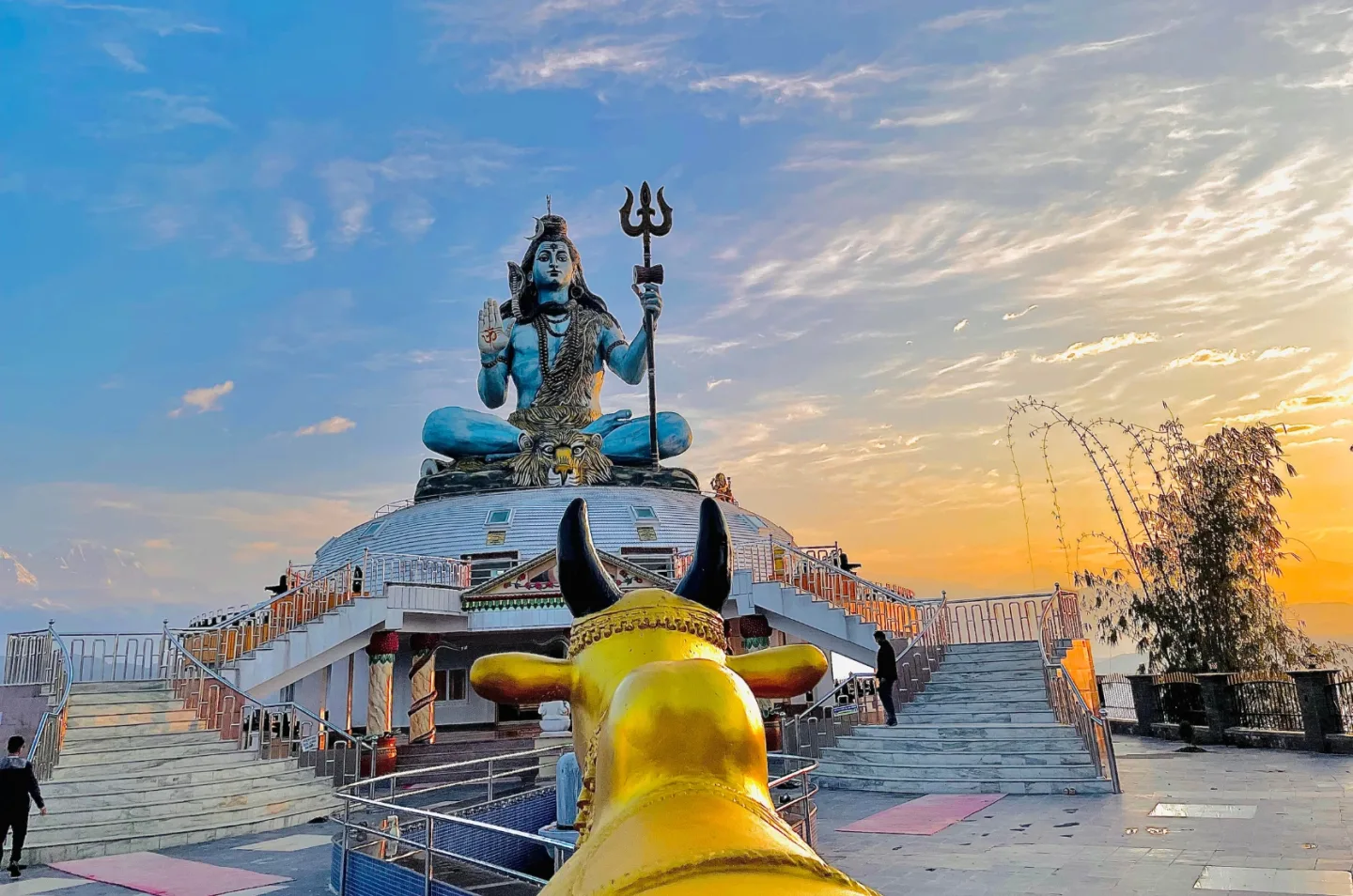
A Pumdikot visit can add a religious and scenic stop to a Pokhara stay. The transport plan should explain more than the drive: where the vehicle stops, how the group reaches the visiting area, how much time is reserved and where the journey continues afterwards. Those details help turn a simple vehicle request into an outing that suits your party.
Decide why Pumdikot is on your itinerary
Some travellers come primarily for a religious visit, while others are interested in the setting and photography. Explain the main purpose when asking for transport. A party that wants time for worship may need a different pace from one making a short sightseeing stop. The Embassy of India’s account of activities in Pokhara identifies the Shiva temple at Pumdikot near Pokhara, providing a useful reference for the destination itself.
Keep the plan focused on the experience rather than on fitting the stop into every available gap. If the visit is important to the group, allow enough time to reach the site, move at a comfortable pace and return to the vehicle. A private car can make the connection easier, but it does not remove the time needed outside the car.
Share the hotel and final destination
Send the exact hotel name and location for pickup. If guests are staying in different properties, identify all collection points and ask whether one shared vehicle or separate arrangements would be more practical. The route needs to account for those pickups before estimating the overall outing. A request that only says “from Pokhara” leaves too much of the service undefined.
State whether you want to return to the same hotel, continue sightseeing or finish elsewhere. If the outing is combined with a hotel change, include the luggage. A vehicle suitable for a short visit with day bags may need a different allocation for a group carrying all its suitcases. The final destination and load should be part of the quote from the beginning.
Ask about access beyond the parking point
Confirm the practical drop-off and the walking or steps involved from there. Tell the team if any traveller has difficulty with steps, needs a slower pace or prefers frequent seated breaks. Those are more useful details than a broad request for a comfortable trip. The operator can then discuss the visit honestly rather than assuming everyone has the same mobility and expectations.
Do not assume that private transport means access to every part of the site by vehicle. Current local arrangements should determine where the driver can stop and wait. If a particular access feature is essential, ask for confirmation before booking. A general vehicle photograph or an older visitor’s description should not replace a current explanation of the actual approach.
Plan time at the destination
Allow time for the group to arrive, orient itself, visit respectfully and take a break if needed. If photographs are a priority, avoid scheduling the collection so tightly that everyone feels rushed. At the same time, keep the driver informed of the agreed visit length. A waiting vehicle still needs a clear service boundary and a known return point.
If the group has different interests, decide how to reunite. Some guests may wish to spend longer at the religious area while others prefer a short visit. Choose a recognisable meeting point and a time that everyone understands. Keep the lead passenger’s contact available and avoid splitting into separate informal plans without telling the organiser.
Combine other Pokhara stops selectively
A Pumdikot outing may be considered alongside other Pokhara sightseeing, but the complete route should be reviewed as one plan. Ask which stops fit naturally with the hotel location and the group’s pace. Do not assume that every nearby-looking attraction can be added without affecting the day. Walking, parking and time spent at each place matter as much as the drive between them.
Mark optional visits clearly. If the group wants more time at Pumdikot or the route takes longer than expected, an optional stop can be moved without undermining the main purpose of the outing. This makes the day more flexible than a list in which every item is presented as essential. A shorter, well-paced route often feels more generous than a crowded one.
Keep weather expectations realistic
Scenic views depend on the conditions at the time of the visit. A clear photograph is an illustration of the destination, not a guaranteed outcome. If the setting is your main interest, ask how the schedule can respond to current conditions and what the booking terms allow. Avoid making the entire day depend on a precise view appearing at a precise moment.
Consider the personal items needed for the expected conditions and the walking portion. Ask the local team or accommodation for current practical advice. If conditions change materially, discuss the plan with operations rather than asking the driver to improvise a substantially different route. The aim is to keep the visit comfortable while respecting the agreed service and current circumstances.
Confirm the vehicle and accompanying services
Provide the guest count and any guide or tour leader who needs a seat. Describe luggage and boarding needs before choosing a car, SUV, Hiace or another category. Ask the team to confirm the actual allocation for the route. A larger vehicle may provide more seating while requiring a different stopping arrangement, so the recommendation should consider both passengers and access.
If you want a guide, language support or a wider sightseeing program, request it explicitly. Transport alone does not automatically include interpretation, admission, meals or other activities. Ask how each item is treated in the quotation. This helps you compare a direct transfer with a more complete excursion without assuming that both prices cover the same experience.
Prepare a concise request
A useful message includes the travel date, hotel, passenger count, preferred pace, any walking concerns and the intended finish. Add whether Pumdikot is the only visit or one part of a wider day. Ask for the proposed pickup time, practical drop-off, waiting arrangement and return plan. The clearer those points are, the easier it is for the team to recommend a suitable service.
Before leaving the site, make sure everyone is present and belongings are collected. If a new stop is suggested, check with operations before adding it. The visit should end with the same clarity with which it began: an agreed vehicle, an agreed destination and enough time for the group to enjoy the experience without unnecessary pressure.
Make the day work for everyone in your party
Before fixing the order of visits, ask each traveller for one priority and one practical concern. One person may want time for photographs, another may prefer a seated lunch, and someone else may need shorter walking sections. These details affect the transport schedule more than a long list of attractions. Give the driver a shared plan rather than several competing sets of instructions. Choose one person to approve changes and pass them to the operations contact.
Treat the time outside the vehicle as part of the itinerary. Parking, walking to an entrance, buying tickets and returning to the meeting point all occupy time. A private car gives you control over your booking, but it does not remove queues or create access where vehicles are restricted. Ask about the closest practical drop-off, then decide whether that arrangement suits the group. If not, adapt the visit before travel instead of relying on an unplanned exception.
Keep the booking brief useful and compact. Include the hotel name and map location, guest count, bags carried during the outing, preferred start, main visits and final destination. Mention if the trip ends at a different hotel. Ask whether the quoted service includes waiting throughout the visits, what the agreed finish time is, and how extra stops are priced. A sightseeing arrangement and a single transfer can look similar in an advertisement while offering very different services.
Keep tickets, guiding and transport clear
A driver and a sightseeing guide have different responsibilities. If you want historical interpretation, help organising visits or a particular language, request a guide explicitly. Similarly, entrance tickets, meals, local activities and parking should be identified in the quotation rather than assumed to be included. Use current attraction information when budgeting because admission categories and opening arrangements can change. Do not treat an old blog price as a confirmed charge for your date.
At the start of the day, save the driver’s contact and agree a recognisable meeting place for every longer stop. If mobile data may be unavailable, keep the name of the hotel and the operations number offline. When the group changes its plans, tell the driver before extending a visit. Clear updates protect the time reserved for the next stop and reduce unnecessary waiting. Leave enough flexibility to enjoy the destination without turning every visit into a race against the clock.
Plan this journey with our team
Vehicle Rent Nepal is a site by Shivalaya Holidays Pvt. Ltd. For the wider holiday, explore Nepal family holiday: Kathmandu, Chitwan, Pokhara and Nagarkot and ask the team to match the transport to your chosen itinerary. Nepal Tour.Travel is also our sister concern. Vehicle hire and a complete tour package have different inclusions, so confirm exactly which services you want in the same quotation.
Send your dates, pickup location, destinations, passenger count and luggage details through our vehicle quotation form. You can also speak with Sushma Aryal on +977 9851206780 or Dinesh Ghimire on +977 9851421660 / +91 8744821660. A clear brief lets the shared team propose the vehicle and arrangements that fit your journey.
Site by Shivalaya Holidays Pvt. Ltd. Our shared Kathmandu team helps arrange private vehicles, border connections and Nepal holidays. Contact our team for arrangements matched to your dates.