Choosing a vehicle for Nepal is easier when you begin with your journey rather than a model name. An airport transfer for two people, a family holiday with several hotel changes and a group arriving through an India–Nepal border connection have different requirements. Passenger numbers matter, but so do luggage, pickup locations, daily travel plans and the places where you intend to stay.
Vehicle Rent Nepal is a sister concern of Shivalaya Holidays Pvt. Ltd. Our transport enquiries use the same expert contacts and operations team, making it easier to coordinate a vehicle with a wider holiday. Nepal Tour.Travel is also our sister concern. This guide explains how to prepare a useful transport brief, compare vehicle options and understand what your quotation should cover.
Start with a simple day-by-day transport plan
Before asking for a price, write down where the journey starts and finishes. Include the arrival date, flight or train details, the exact pickup location and the first hotel. If you have several overnight stops, list them in order. Finish with the departure point and the connection you need to meet.
A request such as “a car for Nepal for five days” leaves several important questions unanswered. Does the vehicle meet you at Kathmandu airport or in Gorakhpur? Will you stay in Kathmandu throughout, or travel to Pokhara and another destination? Does the final day include a return drive or only a hotel-to-airport transfer? These differences affect the service and its cost.
You do not need a finished itinerary before contacting us. A draft is enough to start a useful conversation. Mark the places that are essential and those that are optional. The team can then discuss the route, suggest an appropriate vehicle category and identify arrangements that need confirmation before booking.
Choose a vehicle around people and bags
A vehicle’s advertised passenger capacity does not describe how comfortably it will carry your particular group. A full passenger load with several large suitcases is different from the same number of people carrying small day bags. Tell the team how many adults and children are travelling, how many suitcases you expect and whether you have unusually large items.
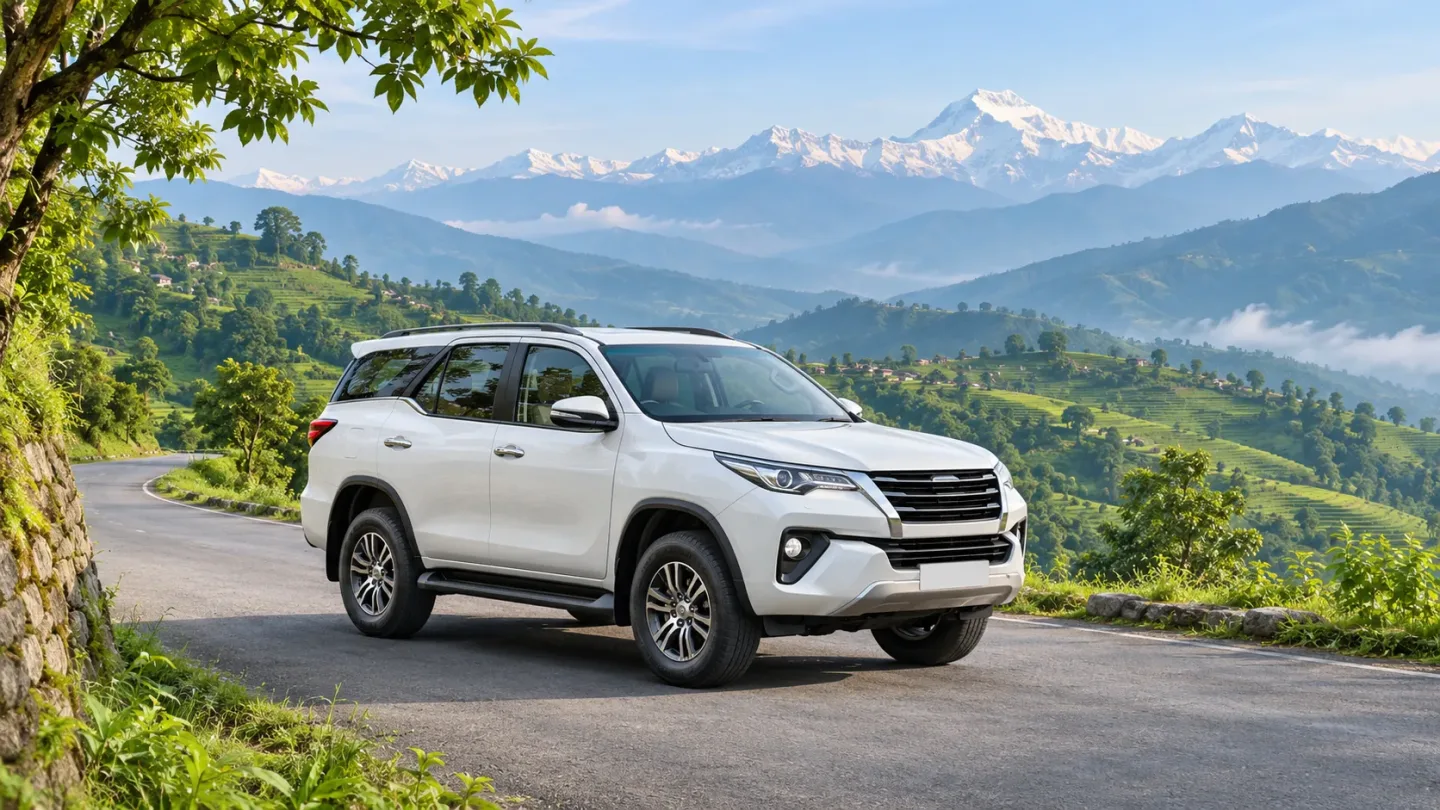
Sedan cars can be a practical option for couples and smaller parties. Scorpio and other SUV options may suit family journeys or routes for which the allocated vehicle is appropriate. Toyota Hiace vans, minibuses and tourist buses offer choices for larger groups. The exact vehicle, seating arrangement and available luggage space should be confirmed for the booking.
Also think about how your group boards the vehicle. If someone finds high steps difficult, explain that before allocation. If you need a particular child-seat arrangement, ask whether it can be supplied and confirmed. Do not assume that a photograph, a model name or a nominal seat count guarantees every feature you need.
For a larger group, consider the experience between stops as well as the seats. A tour leader may need to communicate with passengers. Guests may arrive with different amounts of luggage. A vehicle that suits the main road may not be able to reach a hotel’s entrance. These are useful planning questions to settle early.
Match the booking to the type of service
An airport transfer, a sightseeing outing and a multi-day tour are different transport arrangements. An airport pickup normally starts with the agreed meeting point and ends at the confirmed destination. Extra sightseeing or shopping stops should be discussed separately, rather than assumed to be part of that transfer.
For sightseeing, list the places you would like to visit and the expected pickup and return locations. Allow time for the visit itself, including walking, meals and any queues. A long list of attractions does not automatically make a better day. Prioritising the places that matter most often creates a more comfortable outing.
For a multi-day journey, make the overnight plan clear. Ask how driver expenses, accommodation where applicable and any changes to the agreed route are handled. Clarify whether the vehicle is booked for a specific program or for defined hours at disposal. Neither arrangement should be interpreted as unlimited use unless that is expressly agreed.
If you want hotels and sightseeing coordinated with transport, explore Shivalaya Holidays’ Kathmandu, Chitwan, Pokhara and Nagarkot family holiday. Use the itinerary as a starting point for a conversation about your dates, interests and arrival arrangements.
Airport pickups: make the meeting instructions precise
For a Kathmandu or Pokhara airport pickup, share the flight number, travel date, arrival time and hotel address. Include a working contact number that you can use after landing. If several people arrive on different flights, identify which arrivals belong to the same transfer and who will coordinate the group.
Ask when and how the pickup instructions will be shared. You should know how to identify the driver or representative and what to do if you cannot find them. Keep the operations contact accessible separately from any single messaging application, particularly if you expect to change SIM cards during the trip.
Flight changes can affect the pickup arrangement. Send updated details as soon as you have them, and ask how waiting or a changed arrival is handled under your booking. For departure transfers, work backwards from your airline’s check-in requirements with the operations team, allowing an appropriate road-travel buffer rather than treating a map estimate as a guarantee.
Border pickup and drop-off: plan both sides of the journey
India arrival connections need a more detailed brief than an ordinary hotel transfer. Gorakhpur and Darbhanga are arrival cities, while Sunauli and Raxaul are border gateways. The name of the city where your train or flight arrives is therefore only the beginning of the transport plan.
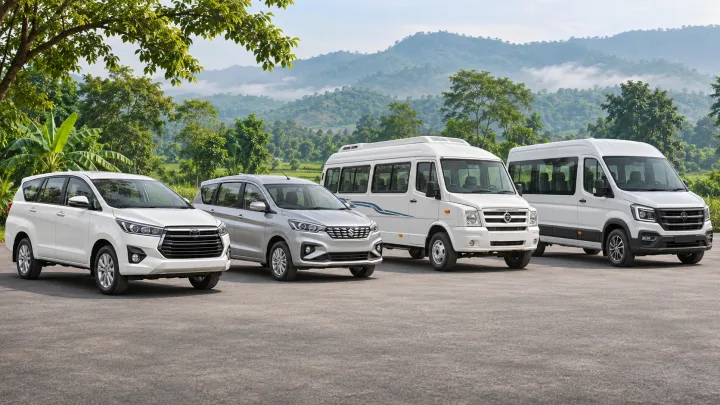
Vehicle Rent Nepal can discuss pickup and drop-off arrangements around Gorakhpur, Sunauli, Raxaul and Darbhanga. For arrival connections and group transfers, the vehicle types to request include Toyota Innova Crysta, Maruti Suzuki Ertiga, Tempo Traveller and Force Urbania. Availability, the allocated configuration and suitability for each leg are confirmed with the quotation.
Do not assume that one vehicle will operate the entire India–Nepal itinerary. Ask which vehicle covers the arrival connection, where you meet the Nepal-side driver and whether a vehicle change is planned. If the proposed service involves cross-border vehicle operation, the team should confirm the permitted arrangement for that booking.
A clear handover plan should identify the meeting location, the contact person, the group’s luggage and what happens if arrival is delayed. For larger parties, nominate one coordinator who can communicate with the operations team and account for passengers and bags. Keep the instructions available to another adult in case the main coordinator’s phone is unavailable.
The return journey deserves the same attention. Share the departure station or airport, the date and the connection time. Confirm the final Nepal stop and the agreed drop-off side. A return transfer should be planned as its own service, with appropriate flexibility, rather than simply reversing the arrival assumptions.
Understand the four border-connection vehicle options
An Innova Crysta is an option to discuss for a family or smaller private group that wants an MPV arrangement. The useful question is not simply whether the model is available, but how the allocated vehicle will accommodate your actual passengers and luggage. Ask about the seating configuration and the space remaining when all required seats are occupied.
An Ertiga may be considered for a smaller arrival group. As with any compact MPV, explain the suitcase count rather than relying on the vehicle’s maximum passenger description. If your party is carrying substantial baggage, ask the team to compare the proposed arrangement with a larger category.
Tempo Traveller requests are common for group connections, but the name does not define one universal seating layout. Specify the group size and request confirmation of the allocated configuration. Include the tour leader, children and any additional passengers in the count, and discuss how luggage will be carried.
Force Urbania is another group-vehicle option for border pickup and departure transfers. Ask for the actual allocation, seating and luggage arrangements for your dates. Treat the vehicle description as part of the written booking, and confirm any agreed substitution terms before paying. The best choice is the one that fits the journey, not simply the largest or most familiar name.
Compare quotations on the same basis
Two prices are only comparable when they describe substantially the same service. Check the vehicle category, passenger count, dates, route, pickup and final drop-off. A quote for a direct transfer should not be compared with a full sightseeing day as though both cover the same work.
Ask what is included in the amount quoted. Useful items to clarify include fuel, driver expenses, parking, road charges, waiting, extra hours and overnight arrangements. For border programs, confirm whether the price covers every transport leg or whether some parts are quoted separately. Also clarify the currency and whether the rate is for the vehicle, the group or each traveller.
Published starting prices can help you identify a service to enquire about, but your final quotation should match your own requirements. A change in the vehicle, route or dates may change the amount. Keep the confirmed quotation and agreed itinerary together so that everyone organising the trip is working from the same information.
Before paying, understand the booking and cancellation terms. Ask how an itinerary change is requested and approved, and what happens when an additional stop or extended use is agreed during travel. A short written confirmation is more useful than relying on a casual conversation that different people may remember differently.
Coordinate transport with the wider holiday
Good vehicle planning connects with the rest of the trip. Share hotel addresses and check-in expectations. If a lodge or event has a fixed activity time, tell the team before the route is finalised. If a temple visit, family occasion or meeting is the main reason for travel, make that priority clear.
For pilgrimage travel, the Muktinath Darshan with Chitwan Jungle Safari program is one relevant Shivalaya Holidays itinerary to discuss. Confirm the current program and transport arrangements with the specialist team; an ordinary vehicle quotation should not be treated as a complete pilgrimage package.
Corporate and incentive groups have different coordination needs. Arrival waves, venue transfers and departure schedules may require several vehicles or a dispatcher’s plan. Shivalaya Holidays’ MICE and incentive programs in Nepal provide a useful starting point when transport needs to work alongside a wider event.
Send a booking brief that gets a useful answer
Before sending your enquiry, check that it includes the travel dates, exact arrival location, flight or train details where relevant, passenger count, luggage and proposed overnight stops. Add the final drop-off, your preferred vehicle category and any specific comfort or boarding requests. If you are still comparing itineraries, say which parts remain undecided.
Vehicle Rent Nepal shares the Shivalaya Holidays expert team: Dinesh Ghimire for planning and quotations, and Sushma Aryal for operations. Contact Dinesh on +977 9851421660 or +91 8744821660, Sushma on +977 9851206780, or email tour@shivalayaholidays.com. You can also use the vehicle enquiry form to prepare a WhatsApp message with your trip details.
The aim is a clear, workable transport plan: a vehicle that fits the group, agreed pickup instructions, understood inclusions and a familiar contact for coordination. Start with those details, and the choice between a car, SUV, Hiace or border-transfer vehicle becomes much simpler.
A sister concern of Shivalaya Holidays Pvt. Ltd. Our shared Kathmandu team helps arrange private vehicles, border connections and Nepal holidays. Contact our team for arrangements matched to your dates.