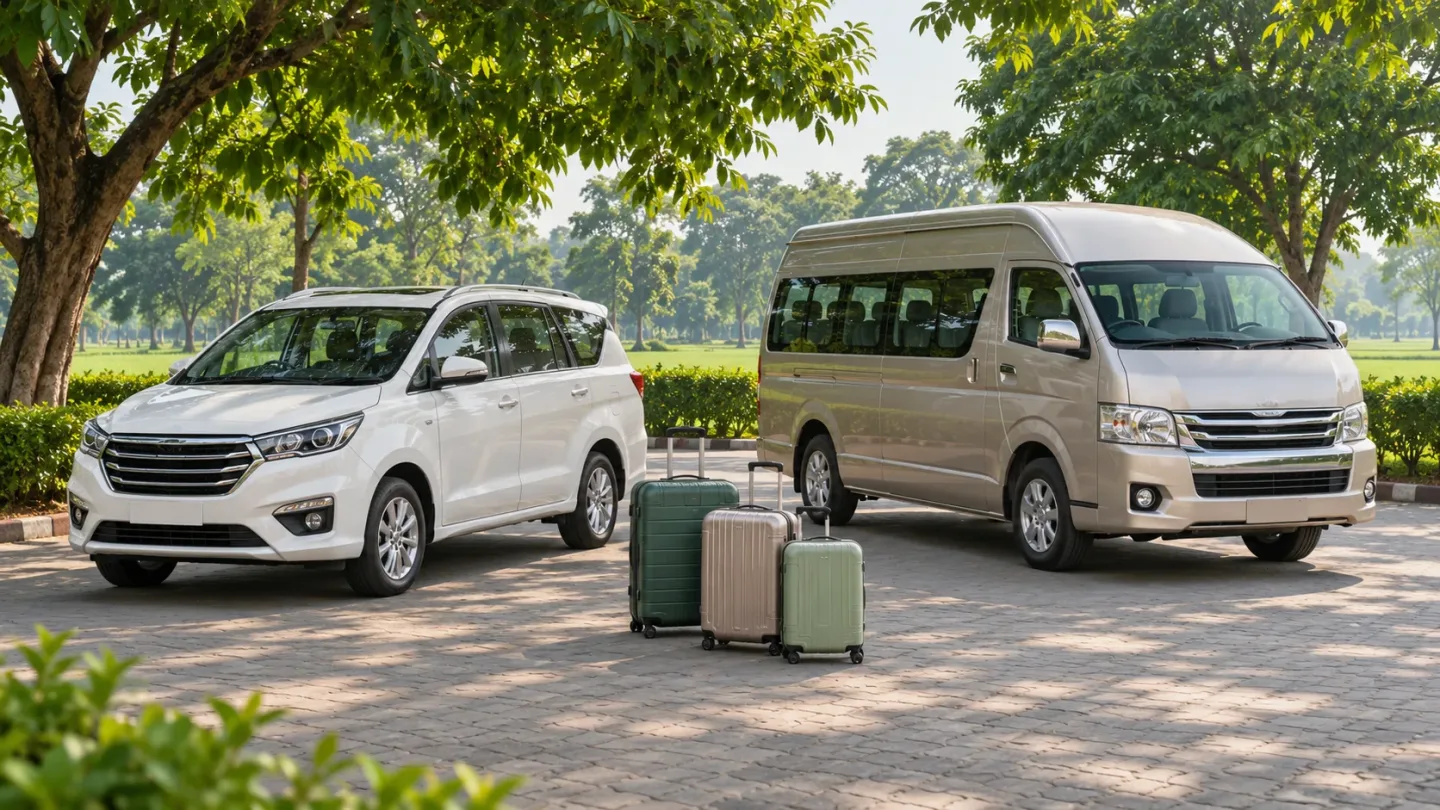
Whether you change vehicles at the Nepal border depends on the confirmed transport arrangement for your route and dates. There is no useful universal answer based only on a vehicle name or a previous traveller’s experience. Ask the provider to explain each leg, the operating arrangement and any handover before you book, so that the group knows exactly what to expect.
Ask for a movement plan rather than a simple yes or no
A clear plan identifies the first pickup, intended crossing, handover location if any, Nepal onward vehicle and final destination. It should also name the contact responsible for coordinating the stages. This is more useful than a broad promise of border service because it tells guests where one responsibility ends and another begins.
If the provider proposes one vehicle throughout, ask for that arrangement to be confirmed for the actual itinerary. If a change is proposed, ask how it works. Neither answer should be inferred from a photograph or a category title. The booking should describe the service that will operate on your dates, not only a general possibility.
Separate passenger arrangements from vehicle operation
Travellers and vehicles have different requirements. Guests should use current official guidance relevant to their nationality and journey, while the operator should confirm how the vehicles will be used on the booked route. A passenger’s ability to enter does not by itself establish that a particular vehicle operates continuously through every stage.
Avoid relying on old blog statements, informal advice or another group’s experience as a complete answer. Conditions and arrangements can differ by route and date. The purpose of asking the operator for a written plan is to replace assumptions with a booking-specific explanation that the organiser can share with the travellers.
Understand why the allocated vehicle may differ by leg
An India arrival connection and a Nepal touring program may use different vehicle categories or providers. The first leg might prioritise collecting guests from a station or airport, while the next must suit several days of hotels and sightseeing. Ask the team to explain the proposed allocation in those terms. A different vehicle is not necessarily a problem when its role and suitability are clear.
If you request Innova Crysta, Ertiga, Tempo Traveller or Force Urbania, specify which leg the preference concerns. Ask what vehicle is planned for Nepal and whether the group’s essential requirements are preserved. Do not assume that naming one category in the enquiry establishes it for every movement in the holiday.
Check passenger and luggage capacity twice
When two vehicles are involved, both need to suit the party. Confirm the guest seating and luggage arrangement on each leg, including any guide or tour leader. A comfortable first vehicle does not solve a capacity issue in the onward allocation. Send the same current manifest and bag count to the coordinating team for the complete journey.
Include unusual items such as a stroller, mobility aid, sports bag or event equipment. Ask how they move during the change and whether handling assistance is included. If a separate luggage arrangement is proposed, define the delivery point and responsibility clearly. The handover should account for the group’s actual belongings, not an assumed standard load.
Make the physical handover explicit
Ask where guests leave the first vehicle, where they meet the next one and how far they move between those points. A map location can help, but it should be accompanied by a clear written instruction. If a representative coordinates the transfer, confirm how to identify that person and which number to call if the meeting is unclear.
For families or larger groups, choose one person to check passengers and another to count bags. Keep essentials with their owners. Do not release the first stage on an assumption that everything has transferred correctly; use the agreed procedure and confirm the handover with the responsible contact. Calm organisation is more useful than rushing through an unfamiliar meeting point.
Clarify costs associated with the change
Ask whether the quotation includes local connections, luggage assistance, parking and waiting at the handover. A vehicle change should not introduce an unexplained charge that the group only discovers on arrival. If something is payable separately, identify the item and the basis before confirming. This makes comparisons between providers more meaningful.
Also ask how additional waiting is handled if the first arrival is delayed. The second vehicle may have its own schedule, and a long delay can affect the arrangement. The booking terms should explain the response rather than leaving guests to negotiate independently with different drivers. One coordinating contact should remain responsible for communicating the current plan.
Preserve comfort and dignity during the transfer
A vehicle change is easier when the organiser considers the needs of the whole party. Explain any difficulty with walking, standing or boarding before the booking is confirmed. Ask what practical assistance can be arranged and avoid accepting a vague promise of accessibility. The exact distance and boarding arrangement matter more than a general description of the service as comfortable.
For children or older relatives, keep the essential bag accessible and allow time to regroup. Do not split the party into several uncoordinated movements simply to move faster. If the group must separate, identify who accompanies each subgroup and where everyone reunites. The handover should remain understandable to the travellers as well as to the operators.
Plan for communication gaps
Save the operations number and meeting instructions offline before travel. Give the team a lead passenger and a backup contact. If mobile data may not work continuously, agree how the group will communicate at the handover. Avoid assuming that every traveller will have a working local connection immediately after arrival.
When the first leg is delayed, notify the coordinator so the next vehicle receives the same update. If the meeting point changes, ask for one clear revised instruction and share it with the whole group. Several informal messages can create more confusion than the delay itself. A current, agreed plan is the best tool for keeping the transfer organised.
Confirm the return arrangement separately
The outward and return journeys may use different schedules, vehicles or meeting points. Ask for the return plan in its own right, especially when it connects with a fixed train or flight. Recheck passenger and luggage counts near departure. A successful arrival is reassuring, but it does not replace the need for clear return instructions and a realistic timing margin.
Confirm the two sides of the journey
Write the arrival connection and the Nepal touring leg as separate lines in your transport brief. Name the station, airport or hotel where the first pickup happens; identify the intended crossing; and name the Nepal destination after arrival. Ask which vehicle operates each leg and whether a change is planned. A request for one vehicle category does not itself confirm that the same vehicle can operate throughout the itinerary.
Passenger entry arrangements and vehicle operating arrangements are separate matters. Obtain current official guidance relevant to your nationality and journey, and ask the operator to confirm the transport plan for your dates. Do not assume that a vehicle photograph, an older traveller’s experience or a previous booking establishes today’s permissions. This guide concerns planning the transfer; it does not replace current entry instructions or a written confirmation of how the booked vehicles will operate.
If a change of vehicle is included, agree the actual handover location and the contact on each side. Ask how luggage moves between vehicles and whether any porter or local connection is included. A family carrying large suitcases needs more detail than the name of a border town. Keep documents, medicines, valuables and items needed immediately after arrival in hand luggage. Count the larger bags before and after the transfer, with one person responsible for checking the total.
Keep communication and timing practical
Share one lead passenger’s reachable number and a backup contact. Save the operations number offline before travel and agree what to do if mobile data is unavailable. Send arrival updates to the coordinating team so that drivers on both legs receive the same information. When a delay changes the plan, ask for revised meeting instructions rather than travelling to a different point on an assumption.
Leave room between arrival, border processing and the onward road journey. Processing, traffic and road conditions are not controlled by the vehicle provider. If your itinerary depends on reaching a distant hotel or a separate departure at a precise time, discuss a more comfortable overnight arrangement. Confirm waiting terms, any extra transfer charges and how cancellations or missed connections are handled. The best border plan is one that explains responsibilities clearly before anyone starts travelling.
Plan this journey with our team
Vehicle Rent Nepal is a sister concern of Shivalaya Holidays Pvt. Ltd. For the wider holiday, explore Nepal family holiday: Kathmandu, Chitwan, Pokhara and Nagarkot and ask the team to match the transport to your chosen itinerary. Nepal Tour.Travel is also our sister concern. Vehicle hire and a complete tour package have different inclusions, so confirm exactly which services you want in the same quotation.
Send your dates, pickup location, destinations, passenger count and luggage details through our vehicle quotation form. You can also speak with Sushma Aryal on +977 9851206780 or Dinesh Ghimire on +977 9851421660 / +91 8744821660. A clear brief lets the shared team propose the vehicle and arrangements that fit your journey.
A sister concern of Shivalaya Holidays Pvt. Ltd. Our shared Kathmandu team helps arrange private vehicles, border connections and Nepal holidays. Contact our team for arrangements matched to your dates.